TL;DR – Quick Takeaway
Men’s and women’s perfumes use the same ingredients—the difference is pure marketing created in the 1900s. Your unique body chemistry matters far more than any gender label. Choose fragrances based on scent preference, not outdated categories.
If you’ve ever wondered about the real difference between men’s and women’s perfumes, you’re not alone. I stood in the perfume section last month, staring at the strict division between pink floral bottles and dark wooden boxes, feeling confused about why scent needed a gender label at all.
“Here’s the surprising truth: the categories are almost entirely marketing constructs, not chemical differences.”
The actual ingredients in both types of fragrances are remarkably similar. What differs is how perfumers blend these notes and which scent families brands traditionally market to each gender.
Let’s unpack what’s actually different, what’s just clever marketing, and how to choose fragrances that work for you.
What Actually Differs Between Men’s And Women’s Fragrances
The differences you smell aren’t about chemistry. They’re about which notes perfumers traditionally blend for each market. The ingredients themselves have no inherent gender at all.

Women’s Fragrances
Women’s perfumes traditionally emphasize floral notes like rose, jasmine, and lily. You’ll also find fruity accents such as berries, peach, and citrus. Sweet notes like vanilla, caramel, and honey are common, along with powdery undertones that create a soft, delicate finish.
These combinations create what marketers call a “feminine” scent profile. But there’s nothing biologically feminine about jasmine or vanilla.
Men’s Fragrances
Men’s colognes usually feature woody notes like sandalwood, cedar, and vetiver. Spicy elements such as pepper, cinnamon, and cardamom add warmth. Earthy base notes including leather, tobacco, and musk create depth and longevity.
The goal is a “masculine” impression. Again, these are just scent families that society has associated with men through decades of advertising.
Where They Overlap
Here’s what most people don’t realize: citrus, amber, and green notes work universally across both categories.
Fresh bergamot, bright lemon, and crisp green elements appear in fragrances marketed to everyone. These shared ingredients are why modern fragrances feel less gender-specific.
Concentration Matters More Than Gender
The concentration also matters more than gender. Eau de Parfum contains 15-20% fragrance oils and lasts 4-6 hours. Eau de Toilette has 5-15% concentration and typically lasts 3-4 hours. Cologne sits at 2-5% and fades within 2 hours.
Eau de Parfum
15-20%
Fragrance oils
4-6 hours
Eau de Toilette
5-15%
Fragrance oils
3-4 hours
Cologne
2-5%
Fragrance oils
~2 hours
Strength depends on concentration percentage, not whether the bottle says “for him” or “for her.”
But here’s what most people don’t realize: these patterns weren’t always gendered. In fact, perfume categories by gender are surprisingly recent.
The Marketing Truth: When Perfumes Became Gendered
Up until the 20th century, there was no such thing as men’s cologne or women’s perfume. Ancient Egyptians, Greeks, and Romans all used the same fragrances regardless of gender. Scent was about status and wealth, not masculinity or femininity.

Before The 1900s: Fragrance Had No Gender
King Louis XIV of France famously wore fragrances heavy in jasmine, tuberose, and orange blossom. These floral notes were considered perfectly appropriate for a powerful male monarch.
No one questioned whether flowers were “too feminine” for the Sun King. Men and women in the upper classes shared the same perfumes freely. The idea that certain scents belonged to specific genders simply didn’t exist.
How The Gilded Age Created Fragrance Gender
The shift happened in the late 1800s and early 1900s during rapid industrialization. Mass production made perfumes affordable to the middle class for the first time. Suddenly, fragrance companies needed to sell more bottles to more people.
Marketing teams realized they could double their market by creating separate categories. They aligned fragrances with the era’s strict gender roles. Men were working and needed to smell strong and powerful. Women were homemaking and should smell delicate and romantic.
Advertising reinforced these stereotypes relentlessly. Masculine ads featured bold imagery showing strength and sophistication. Feminine ads emphasized beauty, romance, and allure. The categories stuck because they were profitable, not because they were scientifically valid.
1994: The Modern Shift Begins
The modern shift began in 1994 when Calvin Klein launched CK One, pioneering mainstream unisex fragrances. It was the first widely successful gender-neutral scent.
CK One proved that people would embrace fragrances marketed without gender boundaries.
Understanding this history helps explain why the same perfume can smell so different from person to person, regardless of the label.
Why The Same Perfume Smells Different On Everyone
Ever loved a perfume on someone else but hated it on yourself? That’s your unique body chemistry at work. Every person’s skin creates a different environment for fragrance molecules to develop.

Skin Type
Dry skin: Absorbs faster, shorter wear
Oily skin: Holds longer, more intense
pH Level
Most skin: 4.5-5.5
Even small variations affect fragrance breakdown
Hormones & Diet
Monthly changes affect scent
Foods influence body’s natural scent
The Scientific Truth
Everyone has completely unique body chemistry. This creates what perfumers call the “final accord” — which is different for every single person. This is exactly why testing fragrances on paper strips in stores is basically useless.
This unique chemistry is exactly why gendered categories make even less sense. Let’s look at some common myths people still believe.
Your Skin Type Changes How Fragrances Perform
Dry skin absorbs fragrance faster, which means shorter wear time. The scent molecules sink into thirsty skin and evaporate more quickly. If you have dry skin, you might need to reapply more often throughout the day.
Oily skin holds scent much longer because the natural oils trap fragrance molecules. This creates better longevity but can also make scents develop more intensely. Some notes that smell light on dry skin might become overpowering on oily skin.
Your skin’s pH level also plays a major role. Most skin falls between 4.5 and 5.5 on the pH scale. Even small variations in this range affect how fragrance molecules break down and which notes become most prominent.
Hormones And Diet Affect Your Natural Scent
Hormonal fluctuations change how perfume smells on the same person over time. Women often notice their favorite fragrance smells different during various points in their menstrual cycle. These natural body chemistry shifts are completely normal.
What you eat influences your body’s natural scent too. Foods with strong compounds like garlic, spices, and alcohol can seep through your pores. These underlying scents mix with your perfume and create a unique final result.
Why Paper Strips Are Useless: Testing fragrances on paper strips in stores is basically pointless. They show you the fragrance in isolation, not how it will smell on your unique skin.
This unique chemistry is exactly why gendered categories make even less sense. Let’s look at some common myths people still believe.
5 Common Myths About Men’s And Women’s Perfumes
Let’s clear up five myths that keep people trapped in unnecessary categories.
Now that we’ve cleared up the myths, here’s how to actually choose fragrances that work for you.
How To Choose Fragrances Regardless Of Gender Labels
Choosing fragrance is simple when you ignore the labels. Focus on what actually matters: how the scent develops on your unique skin.
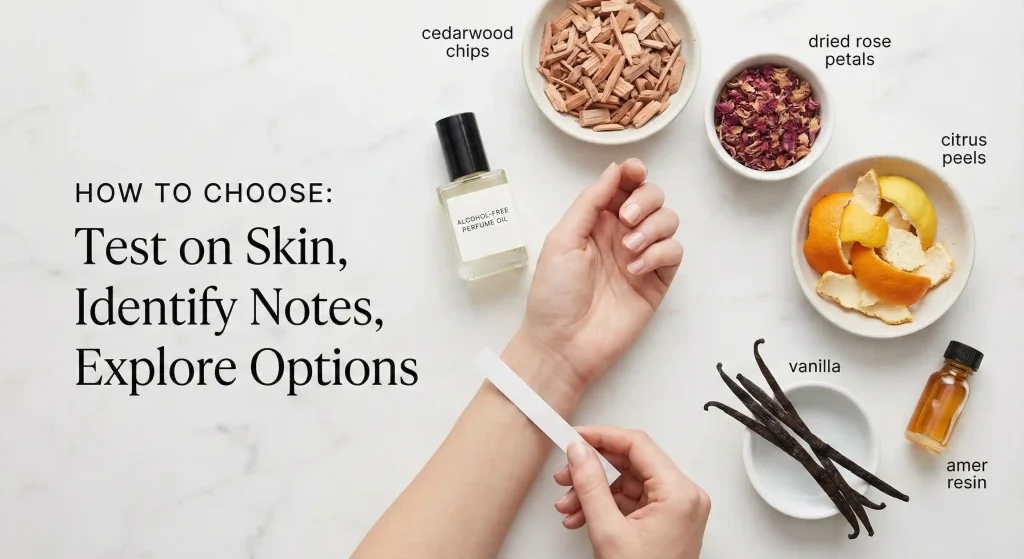
Test On Your Skin, Not Paper Strips
Your body chemistry creates a completely unique scent profile. Those paper strips in stores show you the fragrance in isolation, not how it will smell on you.
Do this: Spray the fragrance on your wrist and wait at least 20 minutes. The top notes fade quickly, revealing the heart and base notes that will actually stay with you.
Pro tip: Test fragrances at different times of the month too, since hormonal changes affect how scents develop.
Important: Walk around the store or come back later in the day. A fragrance that smells amazing in the first 5 minutes might turn unpleasant after an hour.
Identify Notes You Actually Love
Think about scents you’re naturally drawn to in daily life. Do you love the smell of fresh citrus, or do you prefer warm spices? Are you attracted to the earthy scent of woods, or do soft florals make you happy?
Don’t limit yourself to exploring just one gendered section of the store. The “men’s” section might have the perfect citrus-woody blend you’ve been searching for. The “women’s” section could feature a bold amber fragrance that suits your style perfectly.
Consider what moods and occasions you need scents for: something fresh for daytime work, something warmer for evenings out, and something cozy for weekends at home.
Consider Alcohol-Free Options For Sensitive Skin
Traditional alcohol-based fragrances can irritate sensitive skin types. Alcohol-free formulations offer an inclusive alternative that works beautifully on all skin types regardless of gender.
Discover Truly Inclusive Fragrances
We bring perfume oils at Ismaah specifically to be inclusive by design. Alcohol-free options provide excellent longevity and less irritation — perfect for anyone with sensitive skin who’s struggled with traditional fragrances.
Benefits: These formulations also tend to sit closer to the skin, creating an intimate scent experience. You get the same rich fragrance notes without the alcohol bite that bothers many people.
Longevity: Alcohol-free oils often last longer than traditional sprays because they don’t evaporate as quickly.
The best part? You don’t have to choose just one fragrance family.
The Future Is Fragrance Without Boundaries
The difference between men’s and women’s perfumes is simpler than you think: marketing created categories that chemistry never supported. The ingredients are the same. The concentration levels work the same way. Your skin chemistry matters infinitely more than the gender label.
History shows us these divisions are barely 100 years old. Before mass marketing took over, fragrances were simply fragrances. Kings wore jasmine. Everyone enjoyed the same scents based on personal preference and status, not gender expectations.
Modern perfumery is slowly returning to this inclusive approach. More brands are launching unisex lines. More people are confidently shopping across traditional gender boundaries. The future of fragrance is about personal expression, not outdated categories.
Remember This
So next time you’re shopping, ignore the labels. Test what intrigues you. Trust your nose, not the marketing.
Frequently Asked Questions
Can women wear men’s cologne?
Yes, absolutely. One-third of men’s fragrances are purchased by women. Gender labels are marketing constructs, so choose based on scent preference. Test on your skin to see how it develops with your unique chemistry.
Are men’s perfumes stronger than women’s perfumes?
No. Strength depends on concentration like EDP or EDT, not gender. Women’s perfumes often come in higher concentrations than men’s. Look for concentration percentages on the bottle, not the gender label.
Why do perfumes smell different on men and women?
Skin chemistry including pH, oil content, and hormones affects fragrance development. Everyone’s body chemistry is unique, creating a personal final accord. Always test fragrances on your own skin before purchasing.
When did perfumes become gendered?
Early 20th century during industrialization and mass production. Before the 1900s, fragrances were completely unisex. Remember this is a recent marketing invention, not a scientific fact.
What are unisex fragrances?
Fragrances designed without gendered marketing, appealing to all preferences. They often feature balanced notes like citrus, amber, woods, or green accords. Consider alcohol-free options for sensitive skin compatibility across all users.